
28 Kasım 2026
parçalı bulutlu


Trump on Sunday didn’t rule out additional strikes on Iran before the midterm elections, even as he said the war could end soon. Bitcoin and Nasdaq futures wilt.
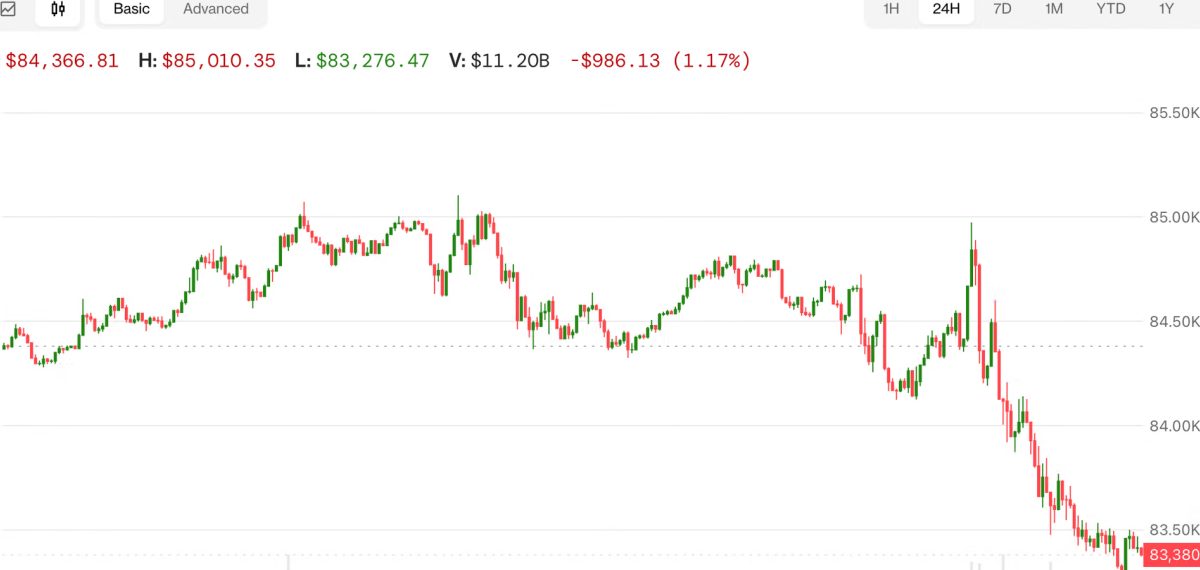
Bitcoin and the Nasdaq started the new week under pressure after US President Donald Trump indicated that further military action against Iran could remain possible before the early November midterm elections.
At 03:30 UTC, bitcoin was trading 1.3% lower at $83,324. Major cryptocurrencies including ether, XRP and solana were also nursing losses, while futures tied to the tech-heavy Nasdaq were down 0.7%.
Oil prices moved in the opposite direction. WTI crude futures gained nearly 1% to $93.28, while Brent posted a similar increase.
Trump said Sunday that he expected the war with Iran to end “very soon”, but declined to rule out a resumption of military strikes before the midterm elections.
When asked by Fox News whether US military action could resume, Trump responded: “I don’t want to say that. I don’t want to say that. I mean, it’s possible, but I just don’t want to say that.”
He also said the United States would prevail through a combination of military and economic pressure.
Iranian Foreign Minister Abbas Araghchi said Tehran was “fully prepared” for a renewed conflict and warned that the country could withstand even a potential “doomsday war.”
During the United Nations General Assembly, Iran proposed reopening the Strait of Hormuz for seven days while pausing the fighting, with broader negotiations on other issues to follow. The strategic oil chokepoint has been disrupted by the war.
Trump rejected the proposal, arguing that Iran was seeking a deal because it was facing heavy pressure. In a post on Truth Social, he also reiterated that Iran “cannot have a nuclear weapon.”
The continuing geopolitical uncertainty has fueled inflation concerns since the war began in early March, contributing to higher Treasury yields. The 10-year Treasury yield has climbed 127 basis points to 5.20%, its highest level since 2007, as markets contend with inflation risks, expectations surrounding Federal Reserve rate hikes and concerns over debt.
Bitcoin declined earlier in the year but has staged a strong recovery during the third quarter, largely shrugging off the uncertainty. Its price has risen 42% over the past three months, outperforming major assets including the Nasdaq and gold.
Market participants are now turning to incoming economic data for indications of bitcoin’s next move.
Vikram Subburaj, CEO of India-based Giottus exchange, said in an email that the $83,800-$84,000 range represents an important near-term support zone, while $85,000-$85,800 marks the immediate resistance area.
He also said limiting leverage and using staggered entries could help manage volatility as markets respond to exchange-traded fund flows, Treasury yields and upcoming US inflation data.
The US PCE inflation report, ISM manufacturing data and nonfarm payrolls are all due this week and could affect expectations for Federal Reserve rate hikes as well as broader market sentiment.