28 Eylül 2026
kapalı


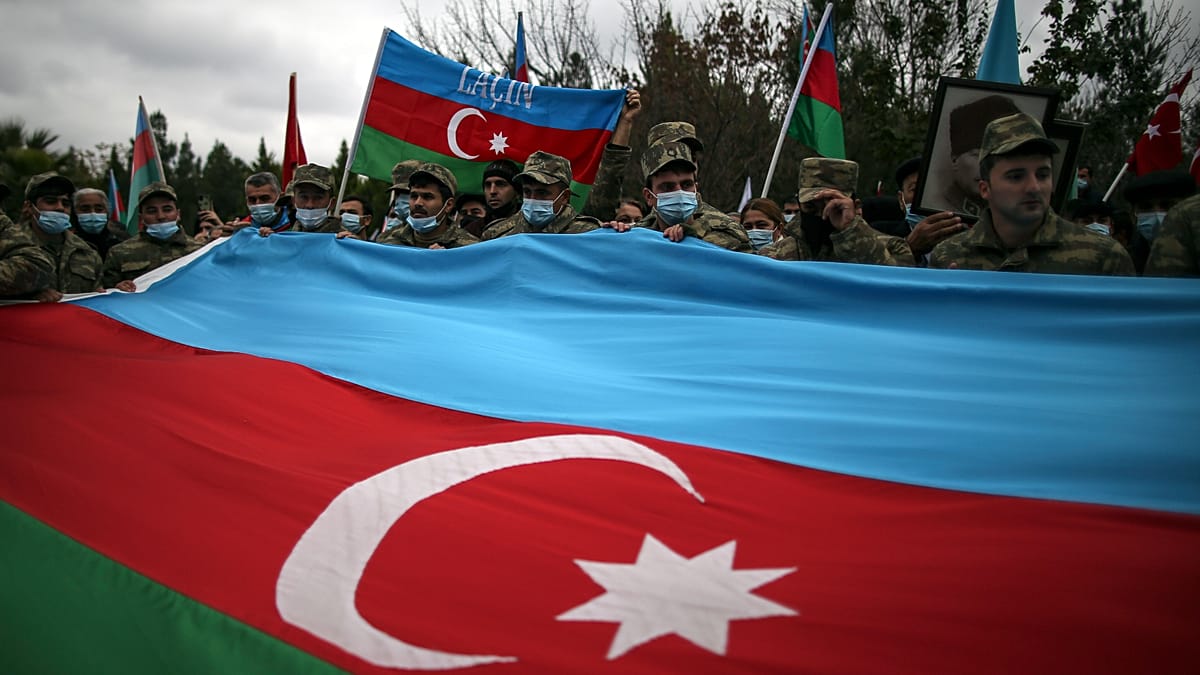
Azerbaijan observes its annual Remembrance Day by honouring its soldiers fallen in 2020, but also building on six years of peace for post-war recovery, new opportunities and regional normalisation.
Azerbaijan Marks Remembrance Day as Peace With Armenia Opens New Regional Opportunities
Azerbaijan is commemorating its annual Remembrance Day with nationwide tributes to soldiers who lost their lives during the 44-day war in 2020, while also highlighting the changing relationship with Armenia and the economic opportunities emerging from the peace process.
The conflict in 2020 ended a decades-long status quo that had followed the dissolution of the Soviet Union and contributed to prolonged tensions and economic stagnation across the South Caucasus. The November 2020 ceasefire reshaped the regional balance and created the foundations for a new political framework between the two countries.
Six years after the war, Azerbaijan and Armenia have moved from the immediate post-war period toward a broader process of regional integration. The emerging relationship includes border delimitation, reconciliation efforts and plans to reopen transport connections that could reshape trade across the South Caucasus.
One of the most visible developments has been the gradual movement of freight between the two countries.
Following Azerbaijan’s removal of transit restrictions in late 2025, cargo began moving toward Armenia through Azerbaijan Railways. Shipments have primarily travelled from Bilajari station toward the Boyuk Kasik junction near the Georgian border before continuing into Armenia.
According to Azerbaijani customs data, direct exports from Azerbaijan to Armenia exceeded $17 million between January and August 2026, representing around 0.08% of Azerbaijan’s total exports.
The shipments included approximately 17,000 tonnes of diesel fuel and around 5,000 tonnes of AI-92 and AI-95 petrol. Azerbaijan also recorded a small amount of imports from Armenia, worth approximately $960 in March.
The railway corridor is also being used for transit involving third countries. Cargo transported through Azerbaijani territory has included nearly 60,000 tonnes of agricultural products, more than 9,000 tonnes of fertiliser and over 1,400 tonnes of propane gas.
Other goods moving through the route included coal, timber and aluminium.
Cooperation has also extended into telecommunications.
Azerbaijan’s AzerTelecom and Armenia’s Telecom Armenia have implemented an agreement under which part of Armenia’s international internet traffic is routed through Azerbaijani territory.
The companies have described the arrangement as an effort to diversify regional connection routes and increase the resilience of telecommunications networks.
The agreement is also linked to wider regional infrastructure initiatives, including the Digital Silk Way project. At the same time, Azerbaijan can use Armenia’s telecommunications infrastructure to transmit data traffic to its Nakhchivan exclave.
Both countries are laying the groundwork for a wider regional transport network. Although large-scale commercial exports from Armenia through Azerbaijani territory have not yet fully developed, official plans envisage deeper economic integration following the completion of a comprehensive peace agreement.
Armenia’s 2026–2031 state programme includes plans to establish broader commercial relations with Azerbaijan and reopen regional transport connections.
Infrastructure projects are also advancing, including railway construction toward the Ordubad direction. A comprehensive agreement could eventually allow Armenia to use Azerbaijan’s transit network for international trade and create a more interconnected transportation system across the South Caucasus.
The economic developments have been accompanied by high-level diplomatic contacts.
On 8 August 2025, US President Donald Trump hosted Azerbaijani President Ilham Aliyev and Armenian Prime Minister Nikol Pashinyan at the White House. The leaders signed a joint declaration outlining the framework for a comprehensive peace agreement between Azerbaijan and Armenia.
The meeting marked a significant stage in the normalization process between the two countries.
The normalization process has also expanded into civil society and international cooperation.
Armenia supported Azerbaijan’s successful bid to host COP29 in Baku, while Azerbaijan backed Armenia’s candidacy for membership in the Eastern European Group of the COP Bureau.
In April 2026, the Peace Bridge initiative brought Armenian and Azerbaijani civil society representatives together in Gabala for a fourth round of dialogue. Participants stressed the importance of cross-border contact and sustained communication as the two societies prepare for the implementation of a potential final peace agreement.
Regional connectivity is also being discussed through the Trump Route for International Peace and Prosperity (TRIPP), a proposed transport corridor through Armenia’s Syunik region intended to connect Azerbaijan with its Nakhchivan exclave.
On 18 September 2026, Armenian Prime Minister Nikol Pashinyan received the Hessian Peace Prize during a ceremony at the Hesse State Parliament in Wiesbaden, Germany.
During the ceremony, Pashinyan spoke positively about the peace process with Azerbaijan and said Azerbaijani President Ilham Aliyev was also deserving of recognition for his contribution to efforts aimed at establishing peace in the South Caucasus.
The developments indicate that the relationship between the former adversaries is increasingly extending beyond diplomacy into transportation, trade, telecommunications and regional infrastructure, with the implementation of the peace process expected to determine the scale and durability of that integration.