22 Ağustos 2026
açık

Dünyaca ünlü yatırımcı Ray Dalio, küresel jeopolitik gerilimlerin aslında parçalı bir dünya savaşının parçası olduğunu savundu. ABD-İran hattı ve Hürmüz Boğazı kritik rol oynuyor.
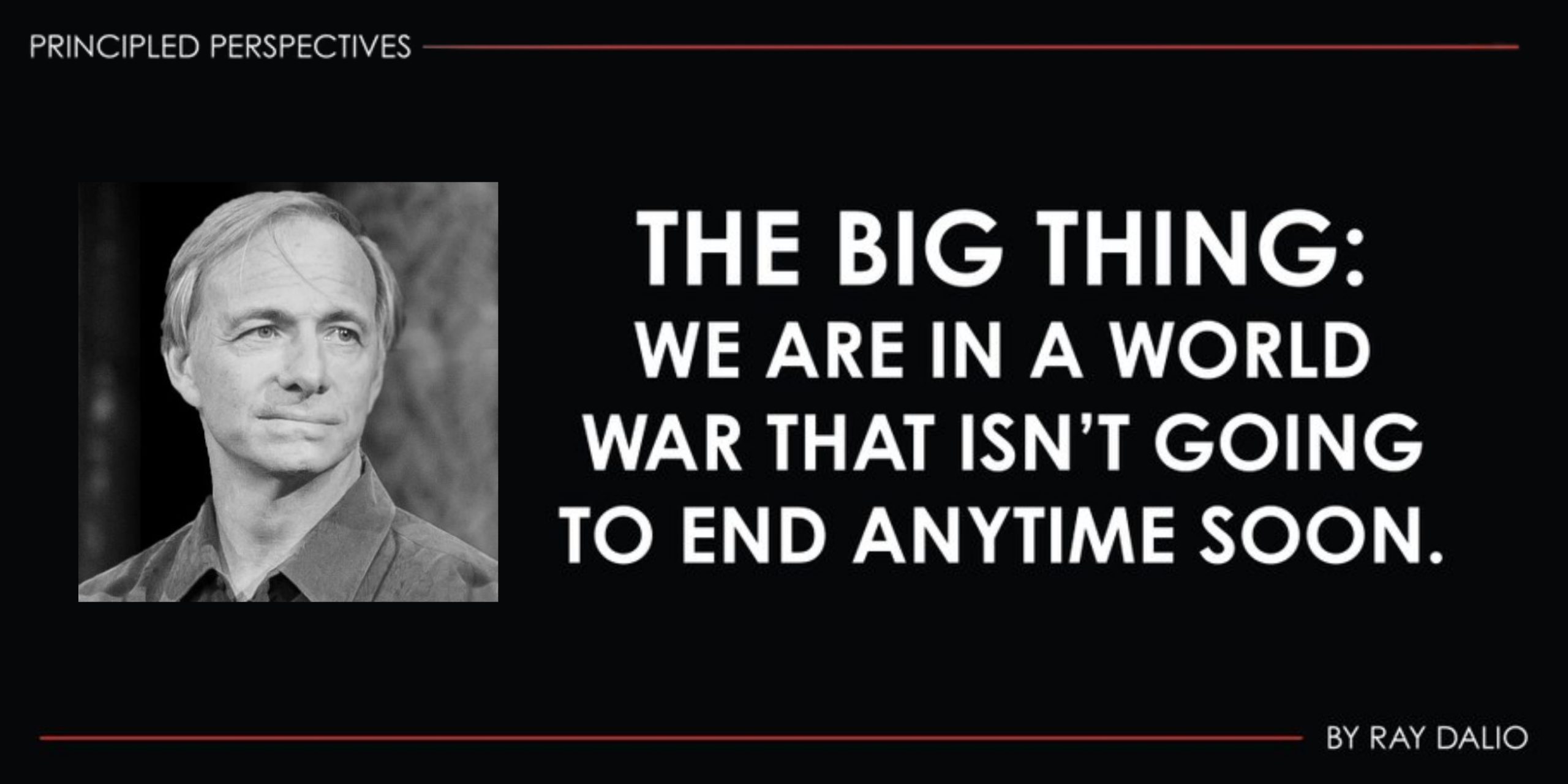
Dünyaca ünlü yatırımcı Ray Dalio, 50 yılı aşkın süredir küresel makro yatırımcı olarak edindiği deneyimlerle, dünyanın içinde bulunduğu jeopolitik durumu kapsamlı bir şekilde değerlendiriyor. Dalio’ya göre, ABD-İsrail-İran savaşı, küresel ölçekte devam eden ve uzun süre sona ermeyecek olan bir dünya savaşının sadece bir parçası.
Dalio, Hürmüz Boğazı, İran’ın füze ve nükleer kapasitesi, ABD’nin asker sevkiyatı ve yaklaşan ABD ara seçimleri gibi yakın vadeli konuların önemini vurgularken, asıl dikkatin uzun vadeli, daha büyük gelişmeler üzerinde olması gerektiğini belirtiyor.
Dalio’ya göre dünyadaki mevcut savaşlar şunları içeriyor:
Bu savaşlar, önceki dünya savaşlarıyla paralellik gösteriyor ve küresel güç dengelerini şekillendiriyor. Dalio, ülkelerin birbirleriyle kurduğu ittifaklar ve anlaşmaların, savaşın gidişatını anlamada kritik olduğunu ifade ediyor. Örneğin, Çin’in İran ve Rusya ile ilişkisi, bu ülkelerden petrol teminini güvence altına alıyor ve küresel enerji dinamiklerini etkiliyor.
Dalio ayrıca tarihteki benzer durumları inceleyerek, ABD’nin aşırı yayılmış askeri üsleri ve mali yükümlülükleri nedeniyle uzun süreli savaşlarda zorlanabileceğine dikkat çekiyor. Bu bağlamda diğer ülkelerin stratejilerini yeniden şekillendirebileceğini ve dünya düzeninde büyük değişikliklere yol açabileceğini belirtiyor.
Dalio, klasik “Büyük Döngü” çerçevesinde, ekonomik, politik, teknolojik ve doğal faktörlerin savaşların seyrini belirlediğini vurguluyor ve bu süreçlerin yakın tarihte 1913-14 ve 1938-39 dönemleriyle analojik olduğunu ifade ediyor.
Sonuç olarak, Dalio dünyadaki mevcut durumu, “güçlünün haklı olduğu ve tek bir gücün düzen sağlayamadığı bir dünya düzeni” olarak tanımlıyor ve küresel çatışmaların daha fazla yoğunlaşabileceğini öngörüyor.

Ray Dalio @RayDalio
Bu zorlu zamanlarda size iyilikler dileyerek ve aşağıdaki gözlemlerde çizdiğim tablonun doğru olmasını istediğim bir tablo olmadığını; öğrendiklerime ve nesnel olarak görmemi sağlayan göstergelere dayanarak doğru olduğuna inandığım bir tablo olduğunu söyleyerek başlamak istiyorum.
50 yılı aşkın süredir küresel bir makro yatırımcı olarak, karşıma çıkacak durumlarla nasıl başa çıkacağımı bilmek için son 500 yılda piyasaları etkileyen her şeyi incelemem gerekti. Bana öyle geliyor ki, çoğu insan o sırada olup biten dikkat çekici şeylere (şu an İran ile olanlar gibi) odaklanma ve bunlara tepki verme eğiliminde. Ancak asıl olanı ve neyin muhtemel olduğunu yönlendiren çok daha büyük, daha önemli ve uzun vadeli gelişen şeyleri gözden kaçırıyorlar. Bugün için en önemlisi şudur: ABD-İsrail-İran savaşı, içinde olduğumuz ve yakın zamanda bitmeyecek bir dünya savaşının sadece bir parçasıdır.
Kuşkusuz, Hürmüz Boğazı ile ilgili ne olacağı (en önemlisi, geçiş kontrolünün İran’dan alınıp alınmayacağı ve hangi ülkelerin bunu gerçekleştirmek için ne kadar kan ve sermaye harcamaya istekli olduğu) tüm dünyada devasa yansımalara yol açacaktır. Ayrıca İran’ın füzelerle komşularına zarar verme kapasitesinin ve nükleer silah tehdidinin devam edip etmeyeceği, ABD’nin ne kadar asker gönderdiği ve ne yapacağı, benzin maliyeti ve yaklaşan ABD ara seçimleri gibi konular da mevcut.
Tüm bu yakın vadeli meseleler önemlidir, ancak insanların asıl büyük ve daha önemli şeyleri kaçırmasına neden oluyorlar. Daha spesifik olarak, çoğu insan bu kısa vadeli bakış açısına sahip olduğu için, şu anki savaşın uzun sürmeyeceğini ve bittiğinde “normale” döneceğimizi bekliyor ve piyasalar bunu fiyatlıyor. Neredeyse hiç kimse, yakın zamanda bitmeyecek bir dünya savaşının erken aşamalarında olduğumuz gerçeğinden bahsetmiyor. Bu farklı bakış açısına sahip olduğum için bunu şimdi açıklayacağım.
Paylaşmak istediğim, dikkat etmemiz gerektiğini düşündüğüm asıl büyük şeyler şunlardır:
Bu kulağa abartılı gelse de, bir dizi sıcak savaşın (örneğin; Rusya-Ukrayna-Avrupa-ABD savaşı; İsrail-Gazze-Lübnan-Suriye savaşı; Kuveyt, Mısır, Ürdün gibi ülkeleri de içeren Yemen-Sudan-Suudi Arabistan-BAE savaşı ve ABD-İsrail-Körfez-İran savaşı) yaşandığı, birbirine bağlı bir dünyada olduğumuz tartışılmazdır. Bu savaşların çoğu nükleer güçleri içeriyor ve ayrıca çoğu ülkenin içinde bulunduğu önemli “sıcak olmayan” savaşlar (ticaret, ekonomi, sermaye, teknoloji ve jeopolitik nüfuz savaşları) da mevcut.
Hepsi birlikte bu çatışmalar, geçmişteki “dünya savaşlarına” benzeyen klasik bir dünya savaşı oluşturuyor. Örneğin, geçmişteki “dünya savaşları”, net bir başlangıç tarihi veya savaş ilanı olmaksızın içine girilen birbiriyle ilişkili savaşlardan oluşuyordu. Tıpkı şu anki savaşlarda olduğu gibi, bu geçmiş savaşlar da hepsini etkileyen klasik bir dünya savaşı dinamiğinde birleşmişti. Bu savaş dinamiğini, yaklaşık beş yıl önce yayımladığım Değişen Dünya Düzeniyle Başa Çıkma İlkeleri kitabımın **6. Bölümü olan “Dış Düzen ve Düzensizliğin Büyük Döngüsü”**nde ayrıntılarıyla anlattım. O bölüm, neler olduğunu ve neler olabileceğini kapsıyor.
Tarafların nasıl dizildiğini; antlaşmalar, resmi ittifaklar, BM oylamaları, liderlerin açıklamaları ve eylemleri gibi göstergelerle nesnel olarak görmek oldukça kolaydır. Örneğin; Çin’in Rusya ile, Rusya’nın İran, Kuzey Kore ve Küba ile nasıl hizalandığını ve bu grubun büyük ölçüde ABD, Ukrayna (Avrupa ülkeleriyle müttefik), İsrail, Körfez ülkeleri, Japonya ve Avustralya’ya karşı olduğunu görebiliriz.
Bu ittifaklar, ilgili oyuncular için işlerin nasıl gideceğini hayal ederken çok önemlidir. Örneğin, bunu Çin ve Rusya’nın BM’de İran’ın Hürmüz Boğazı’nı açık tutması konusundaki eylemlerinde görüyoruz. Benzer şekilde, Hürmüz Boğazı’nın kapanmasından en çok Çin’in zarar göreceği söylense de bu yanlıştır; çünkü Çin’in İran ile karşılıklı destekleyici ilişkisi, Çin’e giden petrolün geçmesine muhtemelen izin verecektir ve Çin’in Rusya ile ilişkisi Çin’in Rusya’dan petrol almasını sağlayacaktır. Ayrıca Çin, 80-90 günlük kullanım miktarında devasa bir petrol stokuna ve diğer enerji kaynaklarına (kömür, güneş) sahiptir. Ayrıca Çin’in İran petrol üretiminin %80-90’ını tüketiyor olması, İran ile ilişkisinin gücünü artırıyor. Her şey göz önüne alındığında, Çin ve Rusya bu savaşın göreceli ekonomik ve jeopolitik kazananları gibi görünüyor. Petrol/enerji ekonomisine gelince; ABD, enerji ihracatçısı olma avantajıyla nispeten avantajlı konumdadır.
Mantık ve tarihsel örnekler şunu açıkça göstermektedir: ABD’nin (1945 sonrası dünya düzeninin baskın gücü) İran (orta ölçekli bir güç) ile olan savaşta nasıl bir performans sergileyeceği, ne kadar para ve askeri teçhizat tüketeceği ve müttefiklerini ne kadar iyi savunacağı diğer uluslar tarafından izlenecek ve dünya düzeninin nasıl değişeceğini büyük ölçüde etkileyecektir. En önemlisi, ABD-İsrail-Körfez ve İran savaşında yaşanacakların, diğer ülkelerin (özellikle Asya ve Avrupa’dakilerin) ne yapacağı üzerinde büyük sonuçları olacaktır.
Bu değişiklikler geçmişte defalarca yaşanmış şekillerde gerçekleşecektir. Örneğin; aşırı yayılmış imparatorlukları belirlemek ve ne kadar zorlandıklarını görmek kolaydır. Şu anda 70-80 ülkede 750-800 askeri üssü olan ABD’ye baktığımızda (Çin’in sadece 1 tane var), tüm dünyada pahalı güvenlik açıkları yaratan taahhütleri olduğunu görüyoruz. Aşırı yayılmış güçlerin iki veya daha fazla cephede başarılı bir şekilde savaşamayacağı açıktır; bu da ABD’nin başka bir cephede (Asya veya Avrupa) savaşma yeteneği hakkında şüpheler uyandıracaktır.
Bu dinamik, diğer ülkelerin hesaplamalarını ve davranışlarını değiştirmelerine yol açabilir. Dünyadaki liderler şu an bu hesaplamaları yapıyorlar. Olaylara bakıldığında ve bu klasik çatışma döngüsü bilindiğinde, 9. Adım‘a ilerlediğimiz görülüyor. Klasik adımlar şöyledir:
Göstergelerim, 1913-14 ve 1938-39 dönemlerine benzer şekilde, savaş öncesi aşamadan savaş aşamasına geçiş evresinde olduğumuzu işaret ediyor. Göstergeler kabaca yol göstericidir; tarihin bize öğrettiği üzere savaşların genellikle kesin bir başlangıç tarihi yoktur (Pearl Harbor gibi istisnalar hariç). Klasik döngüde çatışmaların azalmak yerine şiddetlenmesi beklenir; bu yüzden ABD-İran savaşının nasıl sonuçlanacağı bir sonraki adımı etkileyecektir.
Bu, ABD-İran savaşı için de geçerli bir faktördür. Savaşı kazanmak, düşman teslim olana kadar gerçekleşmez çünkü tüm düşmanları yok etmek imkansızdır. Mao’nun Kore Savaşı’nda dediği gibi: “Hepsini öldüremezler.” Vietnam, Irak ve Afganistan dersleri açıktır. ABD dünyanın en güçlü ülkesi gibi görünse de, aynı zamanda en çok yayılmış ve uzun süreli acıya dayanma konusunda en zayıf büyük güçtür.
“Klasik Büyük Döngü” ile olayların beş büyük güç tarafından yönlendirildiğini kastediyorum:
Kullandığım göstergelerin çoğu Değişen Dünya Düzeniyle Başa Çıkma İlkeleri kitabımda açıklanmıştır. Özellikle 6. ve 7. bölümleri tavsiye ederim.
Tüm bu potansiyel çatışmalara bakıldığında, önümüzdeki beş yıl içinde bunlardan en az birinin gerçekleşme ihtimali bana göre %50’den fazladır.
I will start off by wishing you well in these challenging times and by saying that the picture I paint in the following observations is not the picture I wish to be true; it is the picture that I believe to be true based on what I have learned and what the indicators that I use to objectively see things now suggest is true.
As a global macro investor for over 50 years who has needed to study all things that affected markets over the last 500 years to know how to deal with what’s coming at me, it appears to me that most people tend to focus on and react to the attention-grabbing things that are going on at the time—like what is going on with Iran now—and miss the much bigger, more important, and longer-term-evolving things that are driving what is going on and what is likely to happen. For today, that is most importantly that the US-Israel-Iran war is just part of a world war that we are in and that isn’t going to end anytime soon.
Certainly, what will happen with the Strait of Hormuz (most significantly, whether control of passage through it will be taken away from Iran and which countries are willing to spend how much blood and treasure to make that happen) will have many enormous repercussions all around the world. There are also the issues of whether Iran will still have a capacity to inflict harm on its neighbors with missiles and the threat of nuclear weapons, of how many troops the US is sending and what they will do, of the cost of gasoline, and of the upcoming US midterm elections.
All these near-term issues are important, but they lead people to miss the really big, even more important things. More specifically, because most people tend to have this short-term perspective, they now expect, and the markets are pricing in, that this war won’t last long and that when it ends we will get back to “normal.” Virtually nobody is talking about the fact that we are in the early stages of a world war that isn’t going to end anytime soon. Because I have this different perspective, I will now explain it.
Here are the really big things going on that I think we need to pay attention to:
While this sounds like hyperbole, it is indisputable that we are now in an interconnected world that has a number of shooting wars going on (e.g., the Russia-Ukraine-Europe-US war; the Israel-Gaza-Lebanon-Syria war; the Yemen-Sudan-Saudi Arabia-UAE war that also involves Kuwait, Egypt, Jordan, and other related countries; and the US-Israel-GCC-Iran war). Most of these wars involve major nuclear powers, and there are also significant non-shooting wars (i.e., trade, economic, capital, technology, and geopolitical influence wars) that most countries are in.
Together, these conflicts make up a very classic world war that is analogous to past “world wars.” For example, past “world wars” consisted of interrelated wars that were generally slipped into without any clear start dates or declarations of war. Those past wars combined into a classic world war dynamic that affected them all, as is happening with the current wars. I described that war dynamic in detail in Chapter 6, “The Big Cycle of External Order and Disorder,” of my book Principles for Dealing with the Changing World Order, which I published about five years ago, so it’s there if you want a more comprehensive description. That chapter covers the arc of what we are seeing happen and what is likely to happen.
It is quite easy to see objectively how the sides are lining up via indicators such as their treaties and formal alliances, their votes at the United Nations, their leaders’ statements, and their actions. For example, one can see how China is aligned with Russia and Russia is aligned with Iran, North Korea, and Cuba, and how that group is largely opposed to the United States, Ukraine (which is aligned with most European countries), Israel, the GCC states, Japan, and Australia.
These alliances matter a lot in imagining how things will go for the relevant players, so they need to be considered when observing what’s going on and what’s likely to happen. For example, we see this reflected in China’s and Russia’s actions at the UN on Iran needing to open the Strait of Hormuz. Similarly, as another example, while it’s said that China is particularly harmed by the closing of the Strait of Hormuz, that is wrong because China’s mutually supportive relationship with Iran will probably allow oil going to China to get through, and China’s relationship with Russia will ensure that China will get oil from Russia. China also has a lot of other energy (coal and solar) and a huge inventory of oil (about 90-120 days’ usage). Also noteworthy is that China consumes 80-90% of Iran’s oil output, which adds to the power of its relationship with Iran. All things considered, it appears that China and Russia are the relative economic and geopolitical winners from this war. As for the oil/energy economics, the United States is relatively advantaged, as it is in the enviable position of being an energy exporter.
There are lots of ways of measuring these alliances, including UN voting records, economic ties, and major treaties. They all line up as I described. (If you’re interested in reviewing the major treaties, which are broadly indicative of the relationships, you can find them in Appendix 1. Likewise, if you’re interested in seeing the major existing and potential wars and what my indicators say about the odds of them happening and/or escalating during the next five years, you can find them in Appendix 2.)
For example, both an examination of several analogous cases in history and logic make it obvious that how the United States (the dominant power of the post-1945 world order) performs in the war with Iran (a middle power), how much money and military equipment it expends and depletes itself of, and how well it defends (or doesn’t defend) its allies will be watched by other nations and will enormously influence how the world order changes. Most importantly, we know that what happens in the US-Israel-(and now)-GCC-countries war with Iran will have huge implications for what other countries (most importantly, those in Asia and Europe) will do, which will have big implications for how the world order will change.
These changes will come in ways that have repeatedly happened before. For example, from studying history, it’s easy to identify overextended empires, develop indicators for how overextended they are, and see how they have suffered from being overextended. In looking at what is happening now, it is natural to examine what is happening with the US, which now has 750-800 military bases in 70-80 countries (by the way, China only has 1) and has commitments that create expensive vulnerabilities all over the world. It is also obvious that overextended powers cannot successfully fight wars on two or more fronts, which would lead to doubts about United States’s ability to fight a war on another front (e.g., in Asia and/or in Europe). So this naturally leads me to think about what the current war with Iran means for Asian and European dynamics as well as Middle Eastern dynamics. For example, it would not be surprising to see some problems develop in Asia that would test and reveal the United States’ willingness to rise to the challenge. This would be difficult for it to do because of its extensive preoccupying commitment in the Middle East and the lack of American public support for the Iran war going into the midterm elections, which makes fighting a war on another front implausible.
This dynamic might lead one to expect that other countries watching the dynamic with the US and Iran might change their calculations and behaviors in ways that will reshape the world order. For example, it is logical that leaders of countries with US military bases in them who expect the US to defend them could learn lessons and change behaviors based on how things go for those Middle Eastern countries with US military bases that expect the US to defend them. Similarly, one might conclude that any country that is close to any strait that could be strategically important and/or that has American bases on its territory in a part of the world where there could be a big conflict (such as in Asia, where there could be a conflict between the US and China) will watch and take lessons from what is happening in the Iran war. I assure you that that type of thinking is now happening among world leaders and that what is now happening has happened many times before in similar parts of the Big Cycle. These calculations by world leaders are part of a classic sequence of steps leading to major wars that has repeatedly taken place and is now happening. Looking at today’s events and knowing this classic international world order/conflict cycle, it is apparent to me that we have progressed to Step 9. Does it look that way to you? Here is the classic sequence of steps:
I have many indicators suggesting that we are in the part of the Big Cycle when the monetary order, some domestic political orders, and the geopolitical world order are breaking down. These indicators suggest that we are in a transition stage from the pre-fighting stage to the fighting stage, which is roughly analogous to the 1913-14 and the 1938-39 periods. To be clear, there is nothing precise about these indicators, the picture they paint, or the exact timing.
The indicators are just broadly indicative. For example, history has taught us that wars generally don’t have definitive start dates (with big military events followed by clear declarations of war, like the assassination of Archduke Ferdinand, the German invasion of Poland, and the bombing of Pearl Harbor, being the exception), and economic, financial, and military conflicts typically arose before there were clearly declared wars. Major wars were also typically preceded by developments and indicators like 1) military stockpiles and monies being drawn down; 2) budgets, debts, money printing, and capital controls being built up; 3) rival countries observing the countries fighting and learning what their strengths and weaknesses are; and 4) the overextended leading world power facing the challenge of trying to fight wars on different fronts that are very far apart. These factors all matter, and my measures of them indicate that we should be concerned.
The classic dynamic at this stage in the cycle is for conflicts to intensify rather than subside, so what happens next will be influenced by how the US-Iran war goes. For example, there is already less confidence among some countries that the US will defend them, which, when combined with the recognition that nuclear weapons are a great defensive as well as offensive power, is leading to more talk among countries’ senior policy makers about obtaining nuclear weapons and building up their stockpiles of them and other weapons, particularly missiles and missile defense systems.
To reiterate, I’m not saying that things will definitely progress further along this cycle to an all-out world war. I don’t know what’s going to happen, and I still hope for a peaceful world built on win-win relationships rather than damaged by lose-lose ones. I try in my own small ways to help that. For example, I have had wonderful, simultaneous 42-year relationships with both Chinese and US senior policy makers (as well as people outside of leadership), so in the past and especially during this contentious time, I have tried to support a win-win relationship in ways that are appreciated by leaders from both sides. I do this because I have affections for those on both sides and because win-win relationships are much better than lose-lose ones, even though this is getting tougher for me to do because some people think that “the friend of my enemy is my enemy.”
At this stage of the Big Cycle, just before major wars, circumstances like the inability to resolve irreconcilable disputes with compromises typically drive one stage in the cycle unavoidably to the next until there is a violent resolution, so it’s important to understand the typical Big Cycle and watch what is happening. By giving you my template to compare with actual events as they transpire, my hope is that I can help you see what I am seeing and then decide what you want to do about it.
Consistent with that, I believe that it is important to see that: the world order has changed from a multilateral rules-based world order led by the dominant US power and its allies (e.g., the G7) to a might-is-right world order with no single dominant power enforcing order, which means that we can expect more fighting. A student of history would recognize that the world order is now more like that which existed through most of history prior to 1945 than the post-1945 period we are used to and would understand what the most important implications of this are.
That certainly is a factor in the US-Iran war, with the president assuring the American public that the war will be over in a couple of weeks, gas prices will then decline, and we will go back to our normal prosperous times. There are many good indicators that point to whether a country has the capacity to endure the pain for an extended period of time, such as popularity polls (especially in democracies) and/or the power of government leaders to remain in control (especially in autocracies, where popular opinion doesn’t matter as much). In fighting wars, winning doesn’t occur until surrender. That is because it is impossible to eliminate all enemies. When China entered the Korean War against the United States at a time when China had very little power and the United States was a nuclear power, Mao supposedly said, “They can’t kill us all,” meaning that the enemy can’t win if there are people who keep fighting. The lessons of Vietnam, Iraq, and Afghanistan are clear. Winning happens when the winning country can get out with the losing country no longer remaining a threat. While the United States appears to be the most powerful country in the world, it is also the most overextended major power and the weakest at withstanding pain over a long period of time.
By “classic Big Cycle way,” I mean that events are primarily driven by the five big forces:
Many of the indicators I use to track unfolding events are explained in Principles for Dealing with the Changing World Order. I especially recommend Chapter 6, “The Big Cycle of External Order and Disorder,” and, if you are interested in the unimaginable-in-peacetime investment-related developments that typically happen during wars, I recommend Chapter 7, “Investing in Light of the Big Cycle.”
Below are what appear to be the most important treaties.
Looking across all these potential conflicts, the odds of at least one of them happening over the next five years appears to me to be greater than 50%.
Kaynak: Ray Dalio @RayDalio