22 Ağustos 2026
açık


Punjab enacts law increasing penalties for sacrilege of Guru Granth Sahib and Akal Takht items, aiming to protect Sikh religious sanctity and deter offenses.

The Aam Aadmi Party government in Punjab enacted a law in April to increase criminal penalties for sacrilege against the Guru Granth Sahib, the state government said, making offences cognisable and non-bailable and prescribing jail terms of seven to 20 years with fines of 200,000 to one million rupees.
The legislation, an amendment to the Jaagat Jot Sri Guru Granth Sahib Satkar Act, 2008, was defended by Punjab Chief Minister Bhagwant Mann who said the tougher measures were needed to deter future desecrations and to pursue unresolved cases dating to incidents in 2015.
The law defines sacrilege to include deliberate desecration, damage, burning, tearing, theft, defacement and communications intended to insult the scripture, and allows higher penalties where offences form part of a criminal conspiracy to disturb peace or religious harmony.
Beyond criminal sanctions, the amendment introduces administrative rules on the registration, custody and handling of physical copies of the Guru Granth Sahib and grants the state government powers to frame implementing regulations.
The Akal Takht challenged the law, not over harsher punishments, but because it says the administrative provisions encroach on matters that should be decided by Sikh religious institutions and that the body was not consulted before enactment.
The Akal Takht also objected to plans to assign unique identification numbers to physical copies and to keep a central register, summoning the Punjab Assembly speaker on 8 May to explain why Sikh institutions were not involved.
During its proceedings the Akal Takht questioned Sikh ministers and legislators, and its head, Kuldip Singh Gargajj, described late circulation of the bill to lawmakers as “serious negligence”; the body asked the government to amend the disputed provisions within a month and to refrain from implementing them until then.
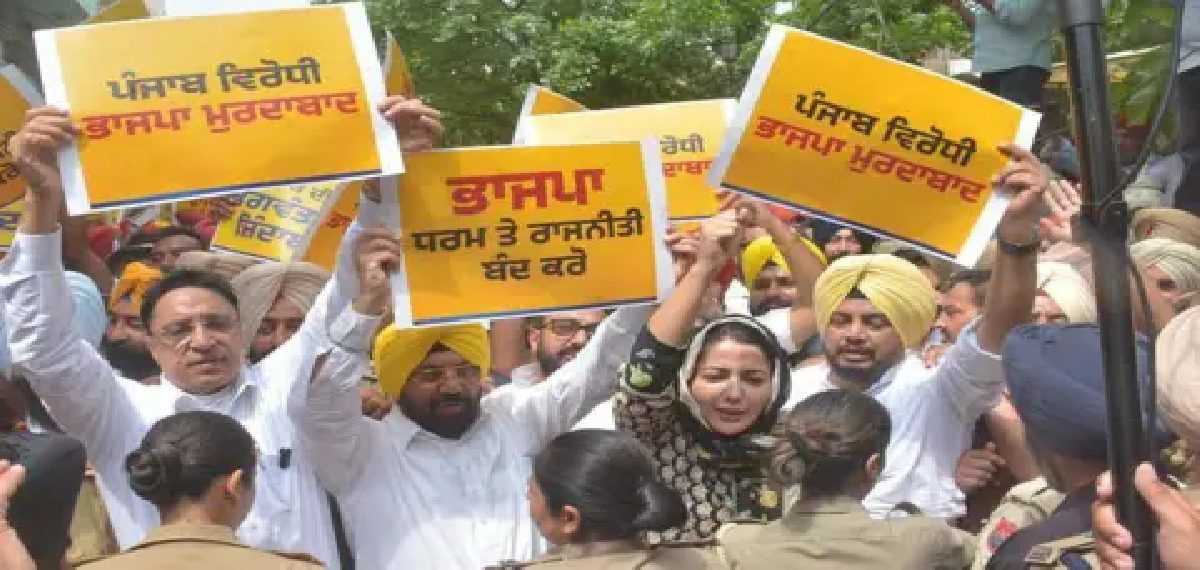
Opposition parties — the Congress, Shiromani Akali Dal and BJP — criticised the AAP for rushing the law through the assembly without adequate consultation, while the government says it remains open to considering the Akal Takht’s suggestions though Chief Minister Mann has ruled out withdrawing the law.
The move follows earlier attempts by Punjab governments in 2016 and 2018 to introduce stricter sacrilege laws; those efforts failed to gain presidential assent amid concerns about singling out one religion, and the AAP government chose in 2025 to amend the existing 2008 act after first proposing a broader bill covering multiple faiths.
The controversy has political ramifications ahead of state elections, with the row intensifying scrutiny of how past sacrilege incidents were handled and adding pressure on the chief minister amid related allegations he has denied.