13 Kasım 2026
açık


Spain’s general strike disrupts transport and sparks nationwide protests over rising housing costs, pressuring government for urgent reforms.
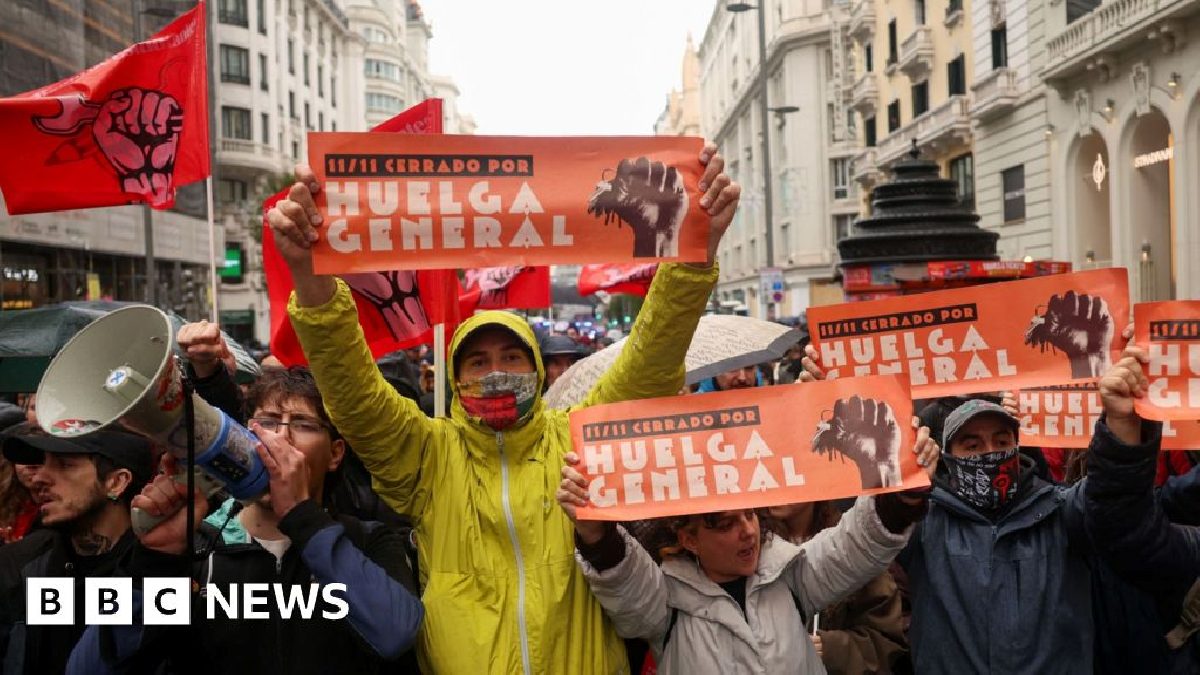
A nationwide general strike disrupted transport and public services across Spain on Wednesday as unions called for action over housing affordability and the rising cost of living, with large demonstrations planned later in Madrid and Barcelona ahead of snap parliamentary elections on 29 November.
Union leaders from UGT and CC OO described participation as massive and very significant respectively, while the Spanish Confederation of Business Organisations characterised turnout as low and uneven across regions and sectors. Major disruption was reported in Madrid and Catalonia, where traffic was stopped on key roads, and the interior ministry said dozens of people were arrested during various incidents.
The strike was catalysed by public anger over housing after the eviction of 87-year-old Maricarmen Abascal from a Madrid flat where she had lived for seven decades; she later died in hospital. Rising rents in Madrid were highlighted by property portal Idealista data showing an average monthly cost of €1,170 in October for a 50m² apartment, compared with Spain’s average gross monthly salary of about €2,460, representing nearly half of average pay and exceeding common affordability benchmarks.
Prime Minister Pedro Sánchez and his allies publicly supported the strike, while the conservative People’s Party criticised the action and accused the government of politicising the protest ahead of the election. The CEOE vice-president Miguel Garrido also criticised the strike as politically motivated and argued businesses were not responsible for housing prices.
Participants included Gonzalo Álvarez, who said he and his partner pay around €1,000 in rent and that roughly half of his salary goes to housing costs, making homeownership unaffordable. The housing dispute and the timing of the strike will be watched as indicators of public discontent before the 29 November vote.
The strike reflects a convergence of social discontent over housing affordability and strategic political timing ahead of snap elections. High participation claims by unions and localized strong disruption in industrial hubs indicate significant mobilization among workers and tenant activists, while business groups and opposition parties frame the action as politically charged. The eviction and subsequent death of Maricarmen Abascal provide a human focal point that amplified public outrage and mobilized support for demonstrations.